
How advertising awards shows shot the industry in the foot

How advertising awards shows shot the industry in the foot
Dan O'Doherty
Creative Advertising Consultant & Copywriter
May 6, 2026
While many things have been levelled at advertising’s door over the years, one thing it can never be accused of is being shy of congratulating itself. Short of the showbiz arenas of film, music and theatre, few industries are so willing and eager to take part in award shows, to flaunt gongs, shower themselves in self-praise and show a bit of leg all in the name of proving who’s best, for this year at least, all while hoping to catch the eye of a CMO or two.
However the criticism that usually surrounds events like Cannes, D&AD, One Show and many of the other advertising awards, often obscures some of the very valid (yet long forgotten) reasons why they began and quickly became so important.
While most businesses and industries run on numbers and metrics, traditionally the output from advertising’s creative agencies is considerably more subjective. Unlike the media side of the business, the ads and concepts it produces are assessed usually by quality, not quantity. And as the output differed radically from client to client, project to project and often day to day, it was very difficult to objectively assess the quality of the work from one campaign to another.
Even when advertising has been a significant driver of a brand or product’s success, the industries and businesses we created campaigns for were often reluctant to give the agencies or even advertising itself much credit for the extra sales or market share the ideas helped generate. So even the end results of the qualitative work were often clouded in mystery.
And while everyone knew when they liked an ad and often instinctively understood whether it would do the job of opening customers hearts, minds or wallets, clients required a little more concrete evidence about the talent they were hiring to promote their brands…A problem that advertising award shows helped solve.
Another problem awards shows helped address, was how agencies would internally rank those that did the creative work, assessing who deserved a bonus, raise, promotion or was worth hiring. In many ways awards allowed the industry to quantify something that seemed otherwise unquantifiable…And rescue management from having to actually make a decision based on gut instinct. Unlike say a salesman whose worth to a business is calculated on the amount of money they bring into a firm, creatives were often assessed on their returns at award shows, where their work was judged by a panel of their peers.
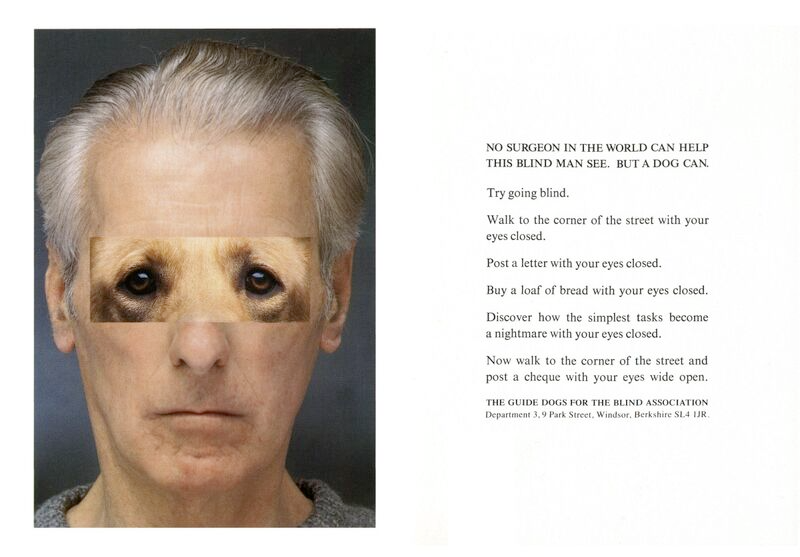
In many ways, this was fair enough. While the size of a media budget or suitability of a media plan are often fundamental to whether a campaign is successful or not, they usually have very little to do with the quality of an ad or campaign itself. Indeed if the media plan was poor, it didn’t mean the ad was and vice versa. The ad below was a supreme example of being highly creative, highly awarded, and yet according to its copywriter Alistair Crompton (also author of The Craft of Copywriting) spectacularly ineffective at delivering results.
For a while, and in the absence of anything better, this state of affairs worked reasonably well. Agency teams entered their best work from the previous year hoping to catch the jurors’ eyes or ears and take another step up the ladder or even get poached by another firm. Indeed my own early career was helped enormously by the following Heinz Ketchup campaign that was recognised at both ICAD and Epica.

What’s really interesting is if you look at award show annuals from before 2010, is how they were filled with highly creative, commercially focused campaigns for household brands that delivered their messages in broad, populist ways. While the evidence about the commercial benefits of creativity were still some way off from being formalised by Peter Field and the IPA, it seemed at least for a while that advertising awards weren’t just a case of the industry slapping itself on the back, that creativity really seemed to benefit brands they were for too. Alistair Crompton’s example aside, exceptional campaigns really did seem to lead to exceptional effectiveness.
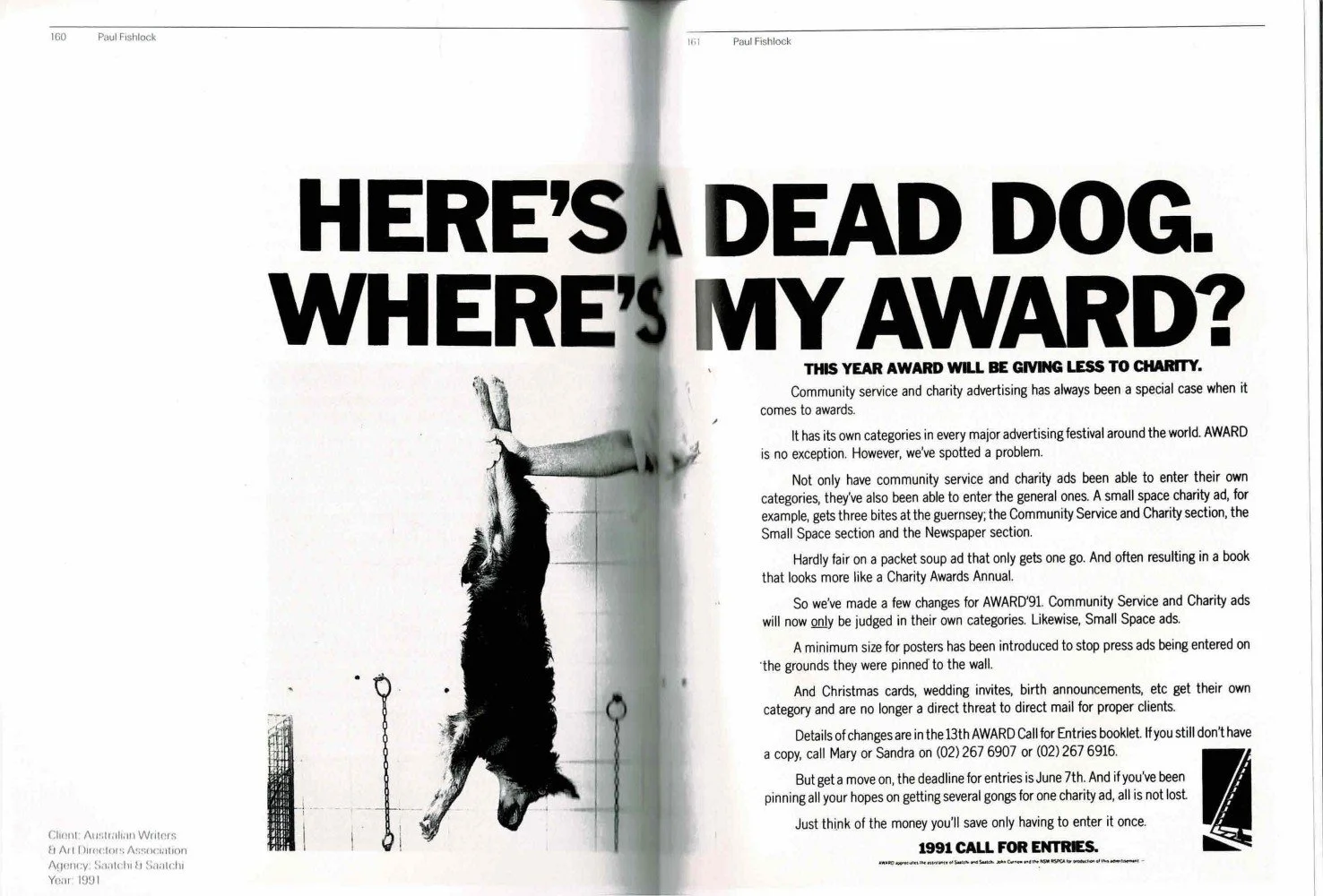
However, pretty soon the system began to fray a little at the edges. No doubt aware that winning at award shows was key to extra financial rewards and career progression, creatives and agencies began to game the system by focusing on sectors that gave them more opportunity to produce award winning work. While essentially this caused little harm, it didn’t go unnoticed. Given the natural advantage they possessed in award shows, by 1990s the proliferation of charity and community service campaign winners caused some award shows to change the entry rules, so these ads had to be entered in their own category.
Yet while this may have changed the guardrails, the incentives for creatives remained the same. So, as time progressed so the gaming evolved, soon progressing (often shamelessly) to entering ads and campaigns that if not outright scams, were worryingly close to it. As ads that ran only once in obscure publications, locations or times of the day (usually the dead of night) could still satisfy the entry criteria for most award shows, these types of campaigns began to flourish. Often they weren’t even commissioned by the clients and brands they were for. Worryingly, this seemed to be done with, if not approval, then a willing blind eye of the award shows, who as businesses seemed to have little interest in actively investigating dubious entries or doing anything that might reduce the amount of entry fees they received.
It got so bad / brazen that eventually the industry and award shows were forced to respond. The magic bullet from Cannes, The One Show and D&AD was the case study, where a creative entry would have to prove its bone fides by providing evidence demonstrating, usually in the form of KPI’s, ROI, sales or market share, what the campaign had actually achieved. So with their hand being forced, advertising creativity had gone from being judged on its own merits, to requiring proof of impact to win an award. Or was it just the appearance of impact…Just with few or little checks about the claims being made in the case study videos, the only thing that really changed at award shows seemed to be the cost and time required to create your submission video. In an industry where the work should be more than capable of speaking for itself, this may seem disturbingly like marking your own homework. And what’s more these, case study videos are also produced with the benefit of hindsight, where every lucky break, unintended consequence and serendipitous event can be reframed as being part of the campaign’s original plan.
It should come as no surprise that this wasn’t going to end well. And entirely predictably this all reached a head when in 2025, 3 x Cannes winning entries were withdrawn by Brazilian agency DM9 after many issues were raised about their campaigns’ legitimacy and the methodology used in their case studies. Although seemingly caught red-handed, you might reasonably ask why this particular agency have been hauled over the coals, when over the years so many other entries sailed so close to the wind. That, however, was a can of worms no one wanted to open.
While the lip service being paid to effectiveness was extremely damaging, a possibly even more insidious development was how major awards like Cannes were now being tied to senior management not just creative remuneration. As if blithely unaware of the consequences, it resulted in an enormous amount of agency resource being refocused from clients and their customers to a new target audience…Award juries. By devoting inordinate time and energy to accounts or projects whose size and fees probably didn’t warrant the attention, but whose product or service might win them an award, agencies began undermining their own financial interests, focusing less and less on work and clients whose fees supported the agency bottom line. Much like the financial crash being caused by misaligned incentives within financial institutions, it could be argued the incentive to win awards was now no longer aligned with the long-term interests of the advertising industry or their client’s businesses.
If that wasn’t bad enough, unbelievably worse was to come…When these misplaced incentives, loose guardrails and the appearance of effectiveness were supercharged with Trojan Horse of brand purpose, a development where the industry seemed to collectively lose its mind, the rot really set in. Now, not only did we have work that wasn’t aimed at increasing sales, profits, market share or even at customers scooping the most prestigious awards, we also had large parts of the industry seemingly ashamed of the industry’s ‘servant of capitalism’ role, wanting to re-brand it as a benevolent, all-caring, global force for good. And what’s more, it was championed by many of the industry bodies like D&AD and Cannes who IMHO and should have been focusing on the industry’s commercial relevance.
So, who have been the losers in all this? Isn’t it just a victimless crime? Well, there isn’t a necessarily a victim, in that we did it to ourselves…But there have definitely been losers. Initially, it was the ordinary, everyday clients, who found their accounts being under resourced in favour of ones that do ‘important work’. Incidentally, how must a client whose account essentially keeps the lights on feel when they hear their agency banging on in a LinkedIn post about ‘important work’ they’ve done. Secondly, it was the award shows themselves, who now find the awards they hand out being devalued reputationally but also by ubiquity (over 900 Cannes Lions were handed out in 2025). Thirdly, it’s junior creatives who after years of seeing a certain type of work being lauded as the pinnacle of creativity, now believe the natural or correct way to solve the loft insulation, chocolate bar or laundry detergent brief in their inbox is to find a DEI initiative or look for a Save the Whales angle to answering it. But lastly and most importantly, it is advertising itself as clients look at an industry that’s no longer aligned to commercial realities, more interested in talking to itself than customers, so place less trust in the work we do, and consequently less budget with us being able to solve the challenges they face. The worst part is, we’ve only got ourselves to blame.